Your Ad Here
Your Ad Here
Your Ad Here

Saturday, July 30, 2011

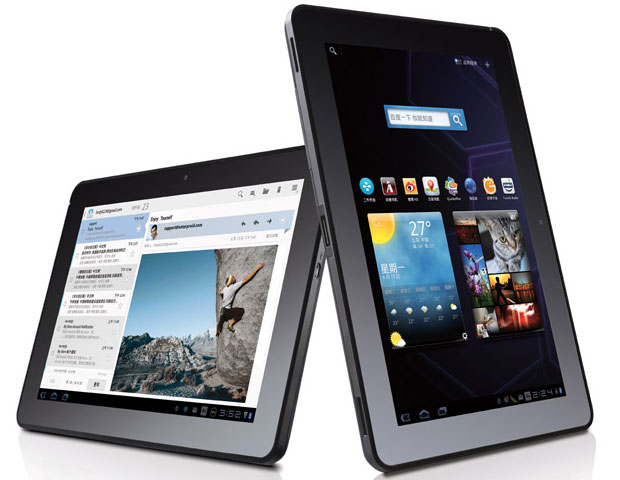
Dell's 10-Inch Streak Is Business Up Front, Party Out Back


Dell (Nasdaq: DELL) on Friday launched the Dell Streak 10 Pro tablet in China. This is the company's first 10-inch tablet. It runs Android Honeycomb 3.1.

The device has work and personal modes, with a firewall of sorts between them so there's no leakage of information between the two.

"What's interesting to me is that Dell set up this tablet for both work and play modes with a security firewall of sorts between the two," Charles King, principal analyst at Pund-It, told TechNewsWorld.
Other tablets on the market don't have such an integrated approach, King pointed out.
Dell said it's launching the Streak 10 in China and will focus on that market and other emerging nations because that's where the growth lies.

"I think the bigger issue is that Apple's (Nasdaq: AAPL) relatively weak in China, so Dell will be able to define their market and they'll be able to do better with a product that hasn't done well so far," Rob Enderle, principal analyst at the Enderle Group, told TechNewsWorld.
Dell did not respond to requests for comment by press time.

Oh Yes, They Call It the Streak!

The Dell Streak 10 has an Nvidia (Nasdaq: NVDA) Tegra T20 duo dual-core 1GHz processor.
It has a Gorilla Glass 10-point capacitive touch 10.1-inch WXGA screen with a resolution of 1,280 by 800 pixels.

The Streak 10 has a 2MP front-facing camera and a 5MP rear camera with autofocus, flash and zoom. It can shoot 1080p high-definition videos.
It also features 1GB of RAM and 16GB of internal memory. It supports SDHC cards of up to 32 GB capacity. Dell's tablet supports Bluetooth and WiFi, and Dell says it will add 3G support if there's demand for that.

The device has dual stereo speakers, two microphones, a micro USB interface and a battery claimed to offer up to 12 hours of life.

The Streak comes in black or gray, has a brushed aluminum back, and supports traditional Chinese. It has the standard sensors -- GPS, an accelerometer, a compass and a gyrometer.
Its weight is about one and a half pounds. It measures 10.3 by 7 by 0.5 inches.

Software includes Dell Work Profile 1.0, Dell Stage and Sync Up, Dell Backup and Restore, Dell OTA software for over-the-air updates, Swype, Baidu apps, and apps for Accuweather and Quickoffice.
The Dell Divide software consists of a separate, secure desktop with work apps, widgets and shortcuts that provide secure, managed connections to work, as well as communication and productivity tools.

SyncUp lets Streak 10 owners autosync the device on their home WiFi network. Dell's offering the Streak 10 at about US$460 through today.

Exploring Cathay

Launching the Streak 10 in China underscores the importance of that country to Dell, according to the company.
It points out that more people are online in China than anywhere else in the world and says it has a significant retail presence in the country, with thousands of Dell-authorized retailers in more than 2,000 cities across the nation. Presently, Apple dominates the tablet market in China.
Figures from Analysys International show that the iPad accounted for more than 78 percent of the market in the first quarter of 2011.

Samsung was a feeble second, with just over 5 percent.
Dell didn't even show up in Analysys's figures. However, Dell might just have a chance to make some headway in China.

Many Apple products, including iPads, are sold on the gray market in China, and although demand for them is strong, "Apple just doesn't have the presence in China, and they're not likely to get it because they're so concerned about knockoffs there that they're not going in big," Enderle said. "That creates the dynamic for Dell to be successful in the China market," he added.

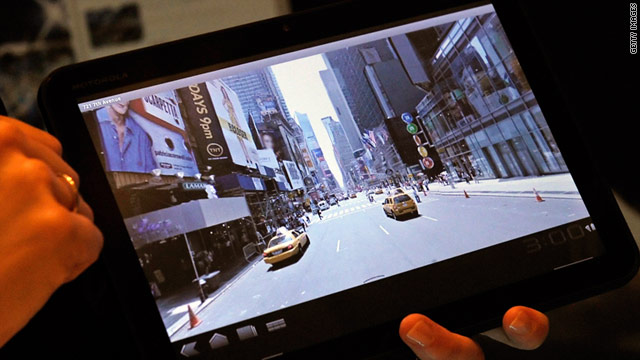
Motorola's Android tablet sales fizzle out


Motorola announced dismal device sales in its earnings report on Thursday, with tablets faring near the worst among the company's products.
The company shipped 11 million mobile devices over the past three months, according to the quarterly statement. Yet only 440,000 of those were tablet devices.

In other words, the Motorola Xoom Android tablet flopped big time.
Out of the remaining 10.56 million devices shipped, 4.4 million of those were smartphones. That number of course pales in comparison to Apple's 20-plus million iPhones sold last quarter, and even to the 5 million Samsung Galaxy S2 smartphones sold in the first three months of the phone's release. Especially considering that's 4.4 million across all of Motorola's device models.

It's a quarter of rough numbers for the company, which of course is facing competition on all sides.
For perspective's sake, compare the 440,000 Xoom tablets with Apple's numbers this quarter: The Cupertino giant sold 9.25 million iPads over the last quarter, almost 20 times the number of Motorola's Xooms.

And it's important to note that when Motorola says 440,000 units "shipped," that signifies the number of devices sold to retail stores, not to customers. It's difficult to determine how many actual sales to customers occurred without further detail.

And even if the iPad weren't doing so well, the Xoom is still competing with the myriad Android tablets available from other hardware manufacturers.
Still, it's not all doom and gloom for the U.S.-based mobile device manufacturer. Smartphone sales are up from 2.7 million during the same time period last year, which is nothing to scoff at.
But with the majority of phone sales being "dumbphones" -- or relatively low-end cellular devices -- the company's strategy of relying heavily on smartphone sales as a strength has yet to pan out.
With any luck, the company will be able to turn things around as more smartphone devices debut in the fall.
Motorola CEO Sanjay Jha announced that the Droid Bionic -- a highly anticipated dual-core smartphone which was pushed back to the drawing board for further improvements -- will debut some time in September.

Friday, July 29, 2011

Apple wins global smartphone crown, Nokia now 3rd

Apple, followed closely by Samsung Electronics, overtook Nokia in global smartphone market
share during the second quarter.
Apple controlled nearly a fifth of the smartphone market, or a share of 18.5 percent, as it
shipped more than 20 million iPhones, according to market research firm Strategy Analytics.
Samsung Electronics wasn't far behind, with 17.5 percent of the market share and 19.2
million smartphones shipped. Nokia fell to third, with its market share plunging by more than half to 15.2 percent from 38.1 percent a year ago.

The ever-shifting top of the smartphone food chain is illustrative of the ultra-competitive nature of the business. Over the past year, Nokia has seen its market share drop as consumers opted for more sophisticated operating systems made by Apple and Google. The declines have forced Nokia to partner with Microsoft and switch to its Windows Phone operating system.
Apple's success continues to hinge on the smash hit iPhone. The company's momentum is expected to only keep building, with the next version expected to come out in September.

Another ingredient for its success: healthy expansion into international markets, with Strategy Analytics pointing to China and the rest of Asia as particular sources of strength.
Samsung, meanwhile, has enjoyed broad adoption of its Galaxy S smartphone franchise. Rather than position it as a "hero phone" at a single carrier, the company has opted to sell the device to as many carriers as possible, making its rapid ascension possible.

Samsung earlier reported a decline in its second-quarter profit, but said smartphone sales continued to grow. Yesterday, the company said it had sold 5 million units of the Galaxy S II in the first 85 days it was on store shelves. Samsung's rapid improvement have some wondering when it may overtake Apple for the smartphone business.

Overall, the global smartphone market grew by 76 percent to 110 million units shipped.
Separately, IDC reported that Apple more than doubled its market share for all mobile phones to 5.6 percent in the second quarter, signaling the largest jump for any of the handset vendors. Based on total handsets, Apple remained in fourth place. Nokia remained the top handset maker despite its market share falling to 24.2 percent from 33.8 percent a year ago, as its strength in low-end handsets in emerging markets has kept its pole position secure.

Samsung, which also has a large business selling basic handsets to markets around the world, had the second-largest market share. Its share slipped slightly as more people moved away from those basic handsets.

Guess What: Justin Bieber Uses A Jailbroken iPhone :D


Many people who own iOS devices have jailbroken them in order to take advantage offeatures Apple might not want users to have access to. It now turns out that one of those people is Justin Bieber, who used a tool that’s only available for jailbroken devices to sent out a tweet.
02/04/2010 - Justin Bieber - Pepsi Super Bowl Fan Jam Concert - South Beach - South Beach, Florida - Keywords:  - 0 -  - Photo Credit: A. Gilbert / PR Photos - Contact (1-866-551-7827)
The tool we’re referring to is qTweeter, a jailbreak tweak that lets users send out messages to Twitter and other social networks from within any iOS app without quitting it. How do we know this? Thanks to Twitter’s "via" field next to every tweet, which displays the client that was used to send that specific tweet. There couldn’t be better evidence that Justin is an iPhone junkie than the picture below.
Bieber's Tweet
Some Justin Bieber fans might be stunned to find this out, but it shouldn’t come as a surprise.Jailbreaking is a procedure carried out by many users every single day by many users of all shapes and sizes, includes not-so-skilled ones. In fact, it’s so easy to jailbreak a device nowadays that a school child with some assistance could successfully perform one. In addition, we must not forget that Bieber is part of a generation that naturally likes to push the boundaries of the potential of everyday technology. For anyone with that goal, modifying iOS is definitely the best way to go about it.
Back when Bieber was just 12 years old, he began submitting his own performances to YouTube. Despite being known as a mainstream artist nowadays, the Ontario-born singer’s roots are definitely the Internet, more specifically YouTube, which was for a long time the only means his music was distributed, completely for free. More than just a well-known singer, Bieber is is an Internet aficionado at heart, so why not an iPhone junkie?
Justin is not the only well-known celebrity who’s used a jailbroken iPhone. Earlier this year, it became known that Justin Long, who starred in the popularly-acclaimed Get a Mac commercials which aired between 2006 and 2009, was revealed to have a Cydia icon on his iPhone, which of course means one thing: Jailbreak!
You can jailbreak your iOS device yourself by running one of the several free tools available, such as JailbreakMe 3.0, which works with iOS 4.3.3 and below, and Redsn0w jailbreak 4.3.5 if you’re running iOS 4.3.4 or above.

Guess What: Justin Bieber Uses A Jailbroken iPhone :D


Many people who own iOS devices have jailbroken them in order to take advantage offeatures Apple might not want users to have access to. It now turns out that one of those people is Justin Bieber, who used a tool that’s only available for jailbroken devices to sent out a tweet.
02/04/2010 - Justin Bieber - Pepsi Super Bowl Fan Jam Concert - South Beach - South Beach, Florida - Keywords:  - 0 -  - Photo Credit: A. Gilbert / PR Photos - Contact (1-866-551-7827)
The tool we’re referring to is qTweeter, a jailbreak tweak that lets users send out messages to Twitter and other social networks from within any iOS app without quitting it. How do we know this? Thanks to Twitter’s "via" field next to every tweet, which displays the client that was used to send that specific tweet. There couldn’t be better evidence that Justin is an iPhone junkie than the picture below.
Bieber's Tweet
Some Justin Bieber fans might be stunned to find this out, but it shouldn’t come as a surprise.Jailbreaking is a procedure carried out by many users every single day by many users of all shapes and sizes, includes not-so-skilled ones. In fact, it’s so easy to jailbreak a device nowadays that a school child with some assistance could successfully perform one. In addition, we must not forget that Bieber is part of a generation that naturally likes to push the boundaries of the potential of everyday technology. For anyone with that goal, modifying iOS is definitely the best way to go about it.
Back when Bieber was just 12 years old, he began submitting his own performances to YouTube. Despite being known as a mainstream artist nowadays, the Ontario-born singer’s roots are definitely the Internet, more specifically YouTube, which was for a long time the only means his music was distributed, completely for free. More than just a well-known singer, Bieber is is an Internet aficionado at heart, so why not an iPhone junkie?
Justin is not the only w

Hacker of Apple iPad-AT&T site reportedly in plea talks

A hacker accused of breaking into an AT&T Web site and stealing data of iPad users is

negotiating a plea agreement a month after an alleged co-conspirator pleaded guilty, Reuter

s reported today.

Andrew Auern

heimer was indicted three weeks ago by a Newark, N.J., grand jury on one count of conspiracy to gain unauthorized access to computers and one count of identity theft. Auernheimer, who lives in Fayetteville, Ark., is free on bail.

U.S. District Judge Susan Wigenton put Auernheimer's case on hold yesterday, saying "plea negotiations are currently in progress and both the United States and the defendant desire additional time to finalize a plea agreement, which would render trial of this matter unnecessary."

Co-defendant Daniel Spitler pleaded guilty on June 23 to the same charges and faces up to 10 years in prison and $500,000 in fines.

Spitler wrote a script called the "iPad 3G Account Slurper" and used it against AT&T servers a year ago to harvest e-mail addresses and associated unique iPad numbers, and plotted with Auernheimer on how to take advantage of the security hole, according to the U.S. Department of Justice office in Newark, New Jersey.

In an interview with CNET last year, Auernheimer admitted that the hackers had compromised the AT&T 3G iPad customer Web site and released data on 120,000 accounts but said they did so with the intention of warning AT&T and protecting consumers.

Thursday, July 28, 2011

Nintendo slashes 3DS price to $169.99

The Nintendo 3DS is getting a price cut.


Nintendo is cutting the price of the 3DS after disappointing worldwide sales.

According to the company, U.S. customers will find the handheld game device on store shelves for $169.99 as of August 12. That's down 32 percent from its initial selling price of $249.99.

In Japan, customers will be able to buy the 3DS for 15,000 yen ($190), discounted from its initial price of 25,000 yen ($317).

Nintendo described the decision as a way to "create momentum for Nintendo 3DS and accelerate its market penetration toward the year-end sales season, when the lineup for the applicable software shall be enriched."

Nintendo of America President Reggie Fils-Aime was a bit more upbeat about the news, saying in a statement that the price cut is "huge motivation" for "anyone who was on the fence about buying a 3DS."

Nintendo has been having trouble selling the 3DS since it launched in February. During the company's first fiscal quarter that ended June 30, Nintendo sold just 710,000 3DS units worldwide. In the U.S., its sales figures during the period hit just 110,000 units.

This isn't the first time that 3DS sales have disappointed. Nintendo said earlier this year that it expected to sell 4 million 3DS units before its fiscal year ended on March 31. However, the company reported in April that it sold 3.61 million 3DS units during the period, prompting Nintendo Chief Satoru Iwata to acknowledge that his company needs to "do a lot more to convey the value" of the portable to consumers.

The basic functionality of the 3DS makes that tricky. The device is unlike any other portable-gaming device on the market because it allows gamers to play titles in 3D without the need for special glasses. To get the full 3D effect, though, the device needs to be angled correctly toward the player and the depth of the 3D images needs to match the user's preference. Those two elements have made the 3DS a tough sell, Iwata acknowledged in April.

"The value of 3D images without the need for special glasses is hard to be understood through the existing media," Iwata said. "However, we have found that people cannot feel it just by trying out a device, rather, some might even mis-estimate it when experiencing the images in an improper fashion. This makes it more important to give people more opportunities for appropriate experiences of glassless 3D images."

Despite the seemingly disappointing sales figures, Iwata said at the time that demand for the 3DS was higher than for previous portable devices from Nintendo but that his company was having a hard time making people "believe 'now is the time to buy it.'"

With this price cut, Nintendo apparently believes that it can bring more gamers into the 3D fold. But the fact that Nintendo's portable didn't sell well at the $249.99 price point might take some by surprise. In January, for instance, Wedbush analyst Michael Pachter told IndustryGamers in an interview that not only was the 3DS priced affordably but that Nintendo was actually pricing it too low.

"It's going to sell out and they're leaving money on the table," Pachter told IndustryGamers. "It's not shareholder friendly, but consumers are going to love the $249 price point."

Pachter added that the 3DS would look like a "bargain" and could have been priced at $300 or more.

But Nintendo isn't focusing only on its pricing to make the sales pitch to customers. The company also said today that The Legend of Zelda: Ocarina of Time 3D has proven popular among 3DS owners and that the company hopes to build upon that success with the launch of Star Fox 64 3D on September 9 and Super Mario 3D Land in November. Nintendo plans to release Mario Kart 7 and Kid Icarus: Uprising in time for the holiday-shopping season.

Nintendo is hoping that those efforts will at least help to jump-start its ailing financial picture. In its fiscal first quarter that ended June 30, the game company generated revenue of $1.2 billion, down over 50 percent compared with the same period last year. Even worse, it posted a loss of about $328.3 million on the quarter.

Nokia E6: It is all about interface

Price: Rs 17,000

Features: 2.46-inch touchscreen, 680Mhz processor, 256MB RAM, 8GB storage, Symbian Anna, 8MP fixed focus camera, 720p video, 133g


Pros: build quality, web browsing


It might be having a rough ride of late, thanks to the efforts of iOS and Android, but there are few who doubt Nokia's ability to churn out quality handsets for the enterprise through its famous E Series. And amongst the latest in that segment is the E6, Nokia's first candybar device to feature both a fullQWERTY keyboard and a touchscreen.

There are more firsts, it is the first phone in the E series to run the latest flavour of Symbian, Anna, and is also the first candybar in the series to come with an eight megapixel camera. It is also choc-a-bloc with the usual E Series goodie, connectivity options galore (Wi-Fi,3G, GPS, you name it), easy e-mail set-up, and lots of bundled software, along with 8GB of internal memory (with support for a 32GB memory card) and a 2.44 inch display with an unusually high resolution for the size (640 x 480 pixels).

And all this comes packed in a body that is definitely eye-catching.Nokia has clearly taken the best out of both the E71 and E72 in terms of looks, retaining metal accents on the front, a steel panel on the back, and serving up a spacious, four-row QWERTY keyboard (with a large spacebar, something we missed in the E72), in a frame that looks solid in spite of being just 10.5 mm thin.

But the E6 is not really about specs or looks, it is all about interface. And for the most part, it works a charm. The 2.44 inch touchscreen (capacitive, incidentally) might seem a bit small to some but it is just perfect for tasks like selecting items, hitting login buttons and scrolling through options or screens (you start out with four customisable homescreens on which you can park application shortcuts and widgets).

Speaking of which, there are no Menu and Options hardware buttons on this device, you need to touch the screen to make them work. Anna has considerably improved the appearance of Symbian, the icons are more colourful and the interface itself is more touch-friendly. The browser has been improved significantly with support for tabs and better and faster page rendering, you can even scroll up and down by tapping the upper or lower part of the display.

Traditional strengths like multi-tasking have been retained and Nokia has thrown in some excellent third-party software to sweeten the deal such as JoikuSpot, QuickOffice and the F-Secure security package. The bright display (326 ppi) is great for watching pictures and videos, call quality is very good, and battery lasts comfortably for a day and a half with widgets and mail in full cry.

Wednesday, July 27, 2011

Sony’s Compact System Camera Has Enough Skill to Perform on Broadway


NEX-C3_1.jpg


The Sony NEX-C3 is an absurdly small camera considering what’s packed inside.

It’s hard to appreciate how tiny it is if you’re using it with the protruding zoom kit lens, which makes this slender camera look like a metallic toucan. It’s front heavy and a bit awkward, almost like it hasn’t fully grown out of puberty. Call it the Lea Michele of digital cameras.

You’ve got to hand it to Sony’s hardware designers, though. The Alpha NEX-C3, like its predecessors the NEX-3 and NEX-5, houses a DSLR-size APS-C (24×16mm) CMOS sensor inside a camera body that’s not much bigger than a smart phone. All these NEX models are so-called Compact System Cameras (CSC), a broad category of consumer-level cameras that accept small interchangeable lenses, but lack the mirror of a traditional DSLR. I shot with NEX-5 last year using an equally slender, 16mm f/2.8 lens and loved both the image quality and the great portability.

The new NEX-C3, which starts shipping next month, looks similar to its predecessors but is smaller — 4.3 inches wide, 2.4 tall and 1.3 inches thick. At just 8 ounces, it’s also lighter. Despite its more petite profile, the NEX-C3’s large sensor boasts 16.2 megapixels of resolution (up from 14.2MP on the older models) and a host of new features designed for photography novices who want to take pictures like the pros.

I got some early hands-on time with a final NEX-C3 camera at a Sony event last week where we shot a dress rehearsal of the long-running Broadway musical Chicago. Ideally, I like a lot more time with a camera before I file a review, but shooting the musical was more challenging than expected, especially considering we weren’t permitted to use any flash. Over the course of the day, I got a good sense of how well the NEX-C3 performs in difficult circumstances. Regular shooting conditions should be a walk in the park.

Though I would’ve liked to have tried it with the 16mm f/2.8 pancake lens or the brand new 30mm F/3.5 macro, I shot with it using the 18-55mm (f/3.5-5.6) kit lens, which helped me zoom in on the action happening on stage. Along with adding to the overall bulk of the camera — it’ll never fit in your pocket — the average aperture range and slow focusing speed of the kit lens made getting sharp shots of the kinetic song-and-dance numbers difficult.

But despite the tough stage lighting — all bright spotlights and colored gels — and the fast, choreographed dance movements, I was able to get a handful of nice photos of the performers. That’s impressive. Equally so was the NEX-C3’s ability to shoot relatively clean images at high ISOs in low light without a flash. I got excellent shots at ISO 1600 that had less noise than what I’d see with some entry-level DSLRs. This was all the more admirable considering the bump up in resolution means the pixels are smaller. At times, skintones were blown out from the bright spotlights, but with this camera and lens combo, that’s to be expected. (Some of this is fixable in Photoshop or by fiddling with the Exposure settings on the C3, which are listed simply as “Brightness” adjustment. More about this below.)

Beginning photographers will appreciate how Sony has tried to make the NEX-C3 comprehensible to those who don’t know the difference between an f/stop and a stop sign. Automated settings on the NEX-C3 let you adjust “background defocus” rather than changing the aperture. Instead of trying to figure out what the right White Balance or Saturation is, you can change Color from warm to cool or Vividness from vivid to soft.

While I liked all this in theory, I’m still not crazy about Sony’s interface to get to these adjustments. There are only a few buttons on the camera, and these are unmarked. To figure out what they do, you have to look at the corresponding menu. And, like the previous NEX models, the C3 is heavily menu-dependent, so you have to dig pretty deep to find the adjustments. Want to fiddle with the ISO? Patience, Grasshopper, patience. The same goes for changing modes; while there’s a blank command dial on back, it corresponds to a virtual model dial on the screen. Oy.

If you can decipher how to change settings — and can I pretty much guarantee that if I bought this for my mom, she’d have me on 24-hour tech support — there’s a lot to like in the NEX- C3 for beginning and even more advanced users.

Art filters are all the rage in digital cameras these days and the C3 has a bunch of them, which Sony calls “Picture Effects”: Pop Color, Toy Camera, Retro, etc. I used Pop Color and Toy Camera while shooting the performers in the dress rehearsal and liked the effects they produced: Pop pumped up the reds and saturated the dark colors but tended to further blow out the highlights. Toy Camera added some funky vignettes.

There’s also a decent Auto HDR feature that takes six shots at a time and scrunches them together into one image, which, theoretically, has a more balanced exposure. Worked pretty well. Even better is the 3-D Sweep Panorama, though I can’t vouch for the 3-D part since I don’t have a 3-D TV. The regular Sweep Panorama feature has been on Sony’s cameras for a few years now, however. It makes creating a expansive wide shot as easy as pressing a button and sweeping the camera in front of your face. Now this is a function my mom would love!

There are also some low-light modes including an Anti-Motion Blur and a Handheld Twilight feature which both combine six shots into one to improve image quality when shooting in the dark. For capturing the performers in Chicago, Anti-Motion Blur was the one to go with, since it raises the ISO to help freeze movement.

While the design of the NEX-C3 is similar to the previous models, it has some subtle changes, including a more curved body with textured ridges on the hand grip that make it easier to hold. There’s also a convenient tilting 3-inch LCD screen that helped me compose from tough angles while photographing the performers. Since I was sitting toward the front of theater at a low angle, all I needed to do was tilt the screen down and hold the camera over my head to get a straight-on shot.

As a video camera, the Sony NEX-C3 is pretty decent, offering a good 720p HD mode with quiet and accurate continuous autofocus that helped me track the dancers and singers as they Bob Fosse’d across the stage. A full 1080p HD mode would’ve been nice though.

Tuesday, July 26, 2011

Apple, AT&T reportedly prepping staff for iPhone 5 launch


Apple and AT&T are both reportedly gearing up their employees for September, the month that the iPhone 5 is expected to launch, according to several reports.

Apple will be bumping up its staff in U.S. retail Apple stores early this fall, according to MacRumors. This follows prior reports of Apple looking to increase staffing in the U.K. from August through October as noted by SlashGear and other tech news sites.

Apple is also bringing back former employees to work part-time for holidays, product launches, and the back-to-school season, added MacRumors, citing a former employee who received an invite to work between August 15 and September 15.

Of course, boosting retail staff around the end of summer is likely a response to more traffic from students going back to school, noted MacRumors. But the timing does coincide with the weeks that Apple would need to prep the iPhone 5 for its retail shelves if the new phone is to launch this fall.

AT&T has also reportedly been revving up its employees to prepare for more foot traffic at its stores in September, a source told Boy Genius Report. The carrier has asked its managers and employees to finish any current training as soon as possible so that they can be available at that time.

The iPhone's other U.S. carrier is anticipating a fall rollout for the next model. Incoming Verizon CEO Lowell McAdam recently said he expects the next iPhone to debut in the fall, though even he isn't sure.

"You will have to ask Apple that, but we expect that probably sometime in the fall, and I think you will see a significant jump there when we get to that point," McAdam said last Friday during a conference call.

The next iPhone has been the subject of varied rumors over the past few months. Some reports say the next iPhone will be only a minor update to the iPhone 4, while other reports have pointed to a entirely new and improved model iPhone 5. Though a variety of launch dates have been bandied about, some of the latest sources have pointed to a fall release, specifically sometime in September.

Your Ad Here